Global: Boscalid Control of Early Blight Fell From 70–75% to 30–40% in Swedish Field Trials
की टेकवे
- 70–75% boscalid efficacy in Swedish trials in 2014
- 30–40% boscalid efficacy after 2015 in the same trials
- 90% of Swedish isolates carried the F129L QoI mutation
- 300 P-days trigger first early blight spray in Wisconsin
हे महत्वाचे का आहे
- शेतकऱ्यांसाठी
- Start early blight sprays at a risk threshold such as 300 P-days and alternate SDHI, triazole and other groups instead of repeating one product
- प्रोसेसरसाठी
- Ask growers how they manage early blight resistance, since defoliation late in the season cuts yield and dry matter
- पुरवठादारांसाठी
- Offer Alternaria resistance testing and position SDHI products only in mixtures with a partner from another FRAC group
६०-सेकंदांचा सारांश
SDHI fungicides against early blight can wear out in a handful of seasons, and that changes how growers should plan the spray programme. Swedish trials at Nymö recorded boscalid giving about 70 to 75% control in 2014 but only 30 to 40% after 2015. Laboratory work traced the loss to SDH mutations that rose from rare to dominant within three years, with mutant isolates needing over a hundred times more active ingredient. Roughly nine in ten isolates also carried the F129L change linked to strobilurin failure. Wisconsin specialists see the same QoI problem in their fields and time the first spray by a heat model, at 300 P-days, which early plantings had passed by late June 2026. The message for agronomists is to mix and alternate groups and to test local fungal populations. The mutation figures come from one Swedish study, and the situation in other regions may differ.
Early blight fungicides can lose their effect within a few seasons. A Swedish study showed this clearly for boscalid, an SDHI fungicide. The paper appeared in the European Journal of Plant Pathology on 22 October 2021.
Field trials ran at Nymö from 2014 to 2017. In 2014, boscalid controlled early blight with an efficacy of around 70–75%. After 2015 there was a clear drop, down to 30–40%, the authors wrote.
Laboratory tests explained the drop. In 2014, the SdhC-H134R mutation was found at several sites, but at a low frequency. By 2017, most samples carried either SdhB-H278Y or SdhC-H134R. Wild-type isolates were highly sensitive, with EC50 values below 1 µg/mL. Mutated isolates had EC50 values above 100 µg/mL.
आठवड्याचे दिवस. एका क्लिकमध्ये सदस्यता रद्द करा.
Strobilurins were already weak. About 90% of the Swedish population carried the F129L substitution, which reduces sensitivity to QoI fungicides. Reduced field efficacy of boscalid has also been reported in several other countries, the authors noted.
Timing sprays with P-days
In the United States, the University of Wisconsin uses a heat-unit model called potato physiological days, or P-days. A value of 300 or more marks the threshold for early blight risk. It triggers the first preventive fungicide application.
By 20 June 2026, early plantings at two Wisconsin sites had passed that mark. Spring Green reached 386 P-days and Arlington 377, according to the extension vegetable pathologist Amanda Gevens. For late blight, the same service uses a disease severity value of 18 or more as the spray trigger.
The Wisconsin update also warns of substantial resistance to QoI fungicides, including azoxystrobin, in the local Alternaria population. Its product list includes SDHI and triazole options, such as boscalid, fluopyram and difenoconazole.
हे महत्वाचे का आहे
Early blight is often treated as a minor, late-season disease. Yet the Swedish data show that a single fungicide group can lose half of its field effect within about three seasons. When both QoI and SDHI groups weaken, few tools remain.
Growers should start sprays by a risk model, not by the calendar. They should also alternate modes of action and use mixtures with a partner from a different group. A resistance test of the local Alternaria population helps to choose that partner.
प्रतिबंध आणि नियंत्रण · संपादकीय टीप
लवकर येणारा करपाAlternaria solaniउत्पादक काय करू शकतात
- प्रतिबंध: Balanced nitrogen, crop rotation, removal of infected haulm आणि volunteers.
- देखरेख: Start sprays by a risk model, such as 300 P-days, not by the calendar.
- रासायनिक संरक्षण: Difenoconazole (FRAC 3), boscalid (FRAC 7), azoxystrobin (FRAC 11) and copper (FRAC M1). Check the national register of your country.
- प्रतिकार व्यवस्थापन: Use groups 11 and 7 no more than two or three times per season, only in mixtures.
ही सूचना potatoes.news च्या संपादकीय टीमने केवळ माहितीसाठी दिली आहे. ही कोणत्याही कंपनीची शिफारस नाही आणि ती बंधनकारकही नाही. केवळ आपल्या देशात अधिकृत असलेली वनस्पती संरक्षण उत्पादने वापरा आणि लेबलवरील सूचनांचे पालन करा. उत्पादनांची नावे आणि नोंदणी देशानुसार भिन्न असतात; स्थानिक कृषी तज्ञाचा सल्ला घ्या.
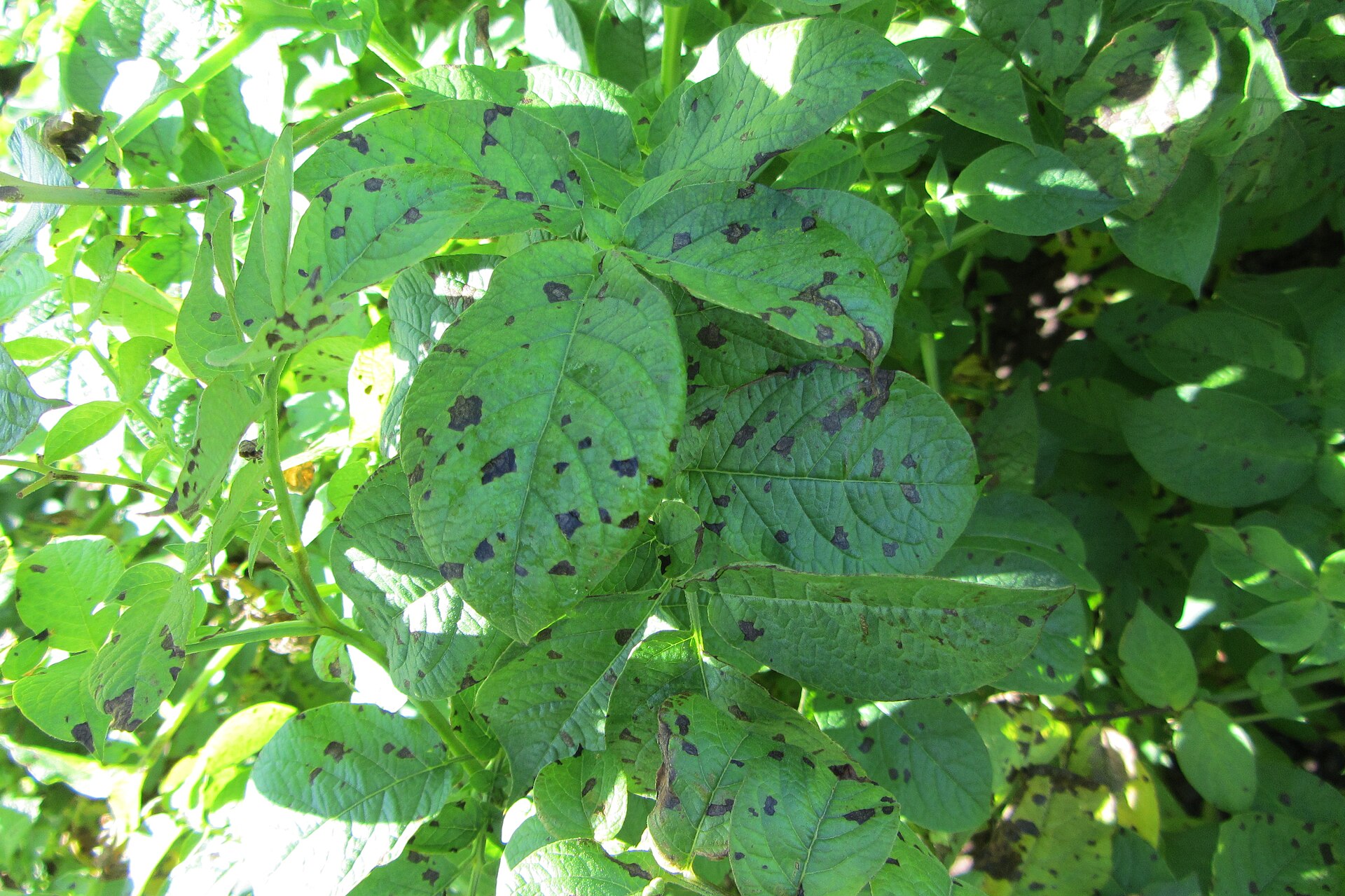
Photo: Early blight (Alternaria solani) on a potato leaf (illustrative). Linnea Stridh / विकिमीडिया कॉमन्स, CC BY-SA 4.0
जागतिक बटाटा संक्षिप्त माहिती
प्रमुख पाच बातम्या, किमती, आजारांविषयी सूचना आणि कार्यक्रम. आठवड्याच्या दिवसांत सकाळी, जाहिराती नाहीत.
सूत्रांनी दिलेल्या माहितीनुसार,
- European Journal of Plant Pathology — Rapid emergence of boscalid resistance in Swedish populations of Alternaria solani (Mostafanezhad et al., 22 October 2021) — https://link.springer.com/article/10.1007/s10658-021-02403-8
- University of Wisconsin–Madison, A. Gevens — Vegetable Crop Update (28 June 2026) — https://vegpath.plantpath.wisc.edu/2026/06/28/vegetable-crop-update-jun-21-2026/
या सामग्रीमध्ये जोडलेले
- देश
- जागतिक
संबंधित कथा

जागतिक: क्षेत्रीय दरानुसार मृत्यूदर ०-५५% पर्यंत कमी झाल्याने कोलोरॅडो बीटल पायरेथ्रॉइड्सपासून बचावतो.

जागतिक: कंद तयार झाल्यानंतरच्या पहिल्या काही आठवड्यांत जमिनीतील ८०-८५% ओलाव्यावर सामान्य खवले रोगाचे नियंत्रण अवलंबून असते.